The Hidden Pearl: A Journey into the Ancient Soul of Art

Every artist remembers the moment their eyes truly opened. For me, that moment happened years ago, in the quiet, dusty hallways of my art college. I was a student then, lost in a sea of techniques and trends, searching for a foundation that felt deeper than just the surface of a canvas. It was during those formative years that I first encountered a set of ancient principles that would eventually change my entire perspective on what it means to create.
Those principles have now culminated in my new book, The Ancient Grammatical Concept of Art. This work is not just a scholarly exploration; it is a labor of love and a bridge across time, reconnecting us with a "lost logic" of creativity that flourished between the fifth and sixth centuries CE.
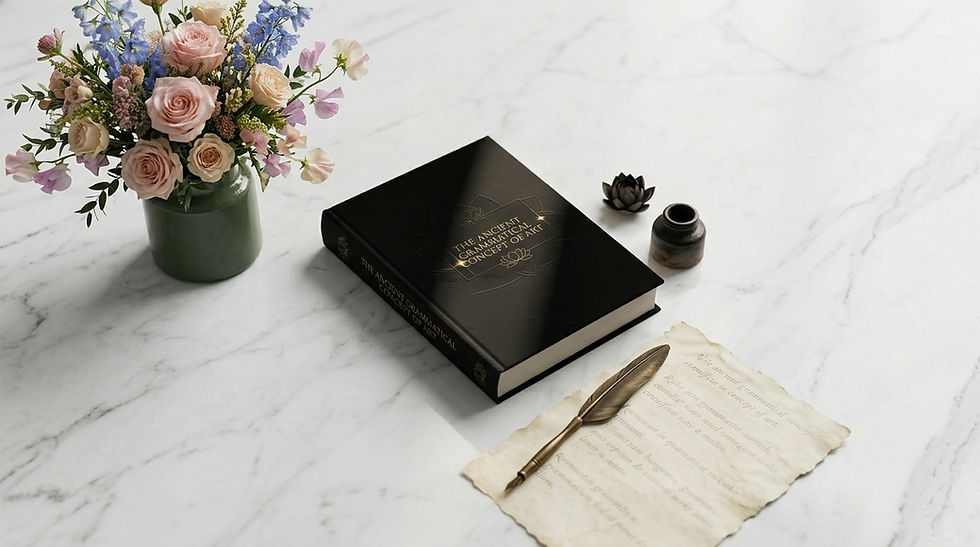
My journey with this book began with a brief mention in a syllabus, written in my native Bengali. But as I matured as an artist, my curiosity grew into a hunger to find the source. I eventually discovered the original details in the sacred Sanskrit language, where the wisdom was distilled into two profound lines of verse.
These lines described the "Chitrasadanga"—the six aphorisms of painting. I learned that these rules were first discovered in the ancient scripture known as the Vishnudharmottara Purana. Later, the famous sage Vatsyayana rewrote them from that text into his own works, though the original author of these genius strokes of wisdom remains anonymous to history.
In this book, I dive deep into these six pillars, which offer a complete guideline for anyone seeking perfection in their work or a deeper understanding for their collection.
What makes Indian art so unique and exceptional is its refusal to merely mimic the "outer space" of an object. These ancient sages advised artists to look inside and discover the "hidden pearl"—the internal structure and spiritual essence that lies behind the physical form.

They believed that nature contains no straight lines; instead, it is a symphony of rhythmic curvatures—the mountains, the clouds, and the waves of the ocean—all designed to inspire joy in the human soul. When we create with this awareness, art becomes more than just a skill; it becomes a form of worship, a "heavenly aptitude" that connects the creator to the Divine.
Whether you are an art student about to begin a journey into the ancient soul of art, but struggling with the limitations of technical skill or you are an art a collector seeking the "soul" behind a painting, this book offers a bridge to a time when art was a sacred devotion. It is a reminder that the language of art is universal, transcending borders and eras.
The Ancient Grammatical Concept of Art is now available on Amazon worldwide. I invite you to open these pages and join me in rediscovering the timeless pulse of creativity. Your brush is your prayer; hold it well. Let me know if you have to share anything precious with me. I always appreciate feedbacks from my readers, and art lovers.


Comments